A beautiful garden can completely change the feeling of a home. It can turn an empty outdoor area into a peaceful place for morning coffee, family gatherings, relaxing evenings, or simply enjoying nature. The good news is that creating an attractive garden does not always require a large budget or professional landscaping skills. With thoughtful planning, regular care, and a few creative ideas, almost any outdoor space can become inviting and enjoyable.
Gardening is also more than planting flowers and watering them. A successful garden depends on choosing suitable plants, understanding sunlight, improving soil, managing water, controlling weeds, and maintaining the space throughout the year. When these elements work together, your garden becomes easier to manage and more rewarding to enjoy.
This complete guide shares practical Garden Tips by DecoratorsHouse to help beginners and experienced gardeners create an outdoor space that looks beautiful while remaining healthy and manageable.
Why a Well-Planned Garden Matters
A garden is an extension of your home. When it is carefully planned, it can improve the appearance of your property while giving you a comfortable place to relax. Good planning also makes everyday maintenance easier.
Instead of filling every available space with plants and decorations, think about how you want to use the garden. You might want an area for entertaining guests, a quiet corner for reading, a space for children, or a dedicated section for growing herbs and flowers.
A clear purpose will help you decide which plants, furniture, pathways, and decorative features are actually useful.
How to Plan Your Garden Before Planting
1. Understand Your Garden Space
Before buying plants, take some time to study the area you want to transform. Notice how much sunlight reaches different parts of the garden during the day. Some areas may receive direct sunlight for several hours, while others remain shaded.
Also consider the size and shape of your space. A small garden needs a different approach from a large backyard. Measuring the available area can help you choose suitable plants, containers, furniture, and decorative features without overcrowding the space.
Pay attention to drainage as well. Water that remains around plant roots for long periods can create problems for many plants. Understanding your garden’s existing conditions gives you a much stronger starting point.
2. Plan Your Garden Layout
A garden looks more attractive when there is a clear sense of organization. Before planting everything randomly, think about where each element should go.
Create a simple layout that includes planting areas, pathways, seating, decorative features, and any existing structures. Leave enough space for people to move comfortably and for plants to grow.
A curved pathway can create a softer appearance, while straight lines often produce a more formal look. The best layout depends on your home’s architecture and your personal taste.
3. Create Different Garden Zones
Dividing a garden into simple zones can make the space more useful. One section might contain flowers, another could hold herbs, while a separate corner could become a seating area.
You do not always need walls or fences to create these zones. Changes in plants, paving, rugs, pots, or furniture can visually separate different areas.
Choosing the Right Plants
4. Choose Plants According to Your Environment
One of the biggest gardening mistakes is choosing plants simply because they look attractive. A plant may look beautiful in a nursery but struggle in your garden if the climate, sunlight, soil, or moisture levels are unsuitable.
Choose plants that naturally suit your local growing conditions. Consider temperature, rainfall, sunlight, and seasonal changes before making your selections.
It is also helpful to combine plants with different heights and shapes. Taller plants can create structure at the back, medium-sized plants can fill the middle, and smaller flowers or ground covers can complete the front.
5. Improve the Soil Before Planting
Healthy soil is the foundation of a healthy garden. Plants need access to nutrients, moisture, air, and space for their roots to develop properly.
If your soil feels hard or lacks organic material, improve it before planting. Compost and other suitable organic materials can help improve soil structure and provide nutrients.
Avoid assuming that every plant needs exactly the same soil conditions. Some plants prefer well-drained soil, while others tolerate more moisture. Learning the basic preferences of your chosen plants can save you time and prevent unnecessary problems.
6. Add Layers of Greenery
A garden becomes more visually interesting when plants are arranged at different heights. Instead of placing everything at the same level, create layers.
Use taller shrubs or small trees as background features. Add medium-sized plants in front of them, followed by smaller flowers or ground-cover plants.
This approach creates depth and makes even a relatively small garden feel fuller. It also helps different plants stand out instead of competing for attention.
7. Use Containers in Small Gardens
You do not need a large yard to enjoy gardening. Containers can transform balconies, patios, entrances, and other compact spaces.
Choose pots in different sizes and arrange them at different heights. You can use ceramic pots for a classic appearance, simple containers for a modern look, or natural materials for a relaxed outdoor style.
Make sure containers have appropriate drainage and are large enough for the plants you choose. Grouping several containers together can create a small garden display without requiring permanent landscaping.
Simple Garden Design Ideas
8. Create a Comfortable Seating Area
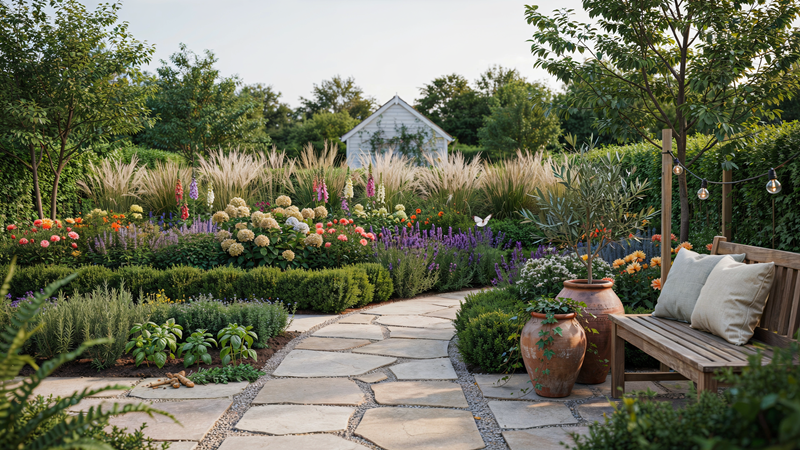
A garden should not only look good; it should also be enjoyable to use. Adding a comfortable seating area can turn your outdoor space into an extension of your home.
Depending on the available space, consider a small bench, outdoor chairs, or a compact table. Place seating near attractive plants or beneath a suitable shade structure.
A few cushions and an outdoor-friendly throw can make the area feel more welcoming. Keep the arrangement practical so there is still enough room to walk around comfortably.
9. Use Lighting to Extend the Garden Into the Evening
Outdoor lighting can dramatically change the atmosphere of a garden after sunset. You do not need extremely bright lights everywhere. Soft, carefully positioned lighting is often more attractive.
Use lights near pathways, entrances, seating areas, or important garden features. Solar-powered garden lights can be convenient for certain locations because they do not require complicated wiring.
The goal is to create a warm atmosphere while maintaining enough visibility to move around safely.
10. Add Natural Materials
Natural materials can make an outdoor space feel connected to its surroundings. Wooden benches, stone pathways, woven baskets, clay pots, and natural gravel can all contribute to a relaxed garden style.
Try to repeat materials throughout the garden rather than using too many unrelated finishes. For example, a wooden bench can work beautifully with wooden planters or a small timber feature nearby.
Natural materials also pair well with greenery because they create a balanced combination of hard and soft textures.
11. Keep the Color Scheme Balanced
Color plays an important role in garden design. Too many unrelated colors can make a space feel chaotic, while a carefully selected palette creates visual harmony.
Choose two or three main colors and use different shades throughout the garden. Greenery provides a natural foundation, while flowers and accessories can introduce additional colors.
You can change seasonal flowers without completely redesigning the garden.
Essential Garden Care Tips
12. Water Plants at the Right Time
Watering is one of the most important parts of garden maintenance, but more water does not always mean healthier plants.
Different plants have different watering requirements. Instead of following the same routine for everything, check the moisture level of the soil and understand the needs of each plant.
Watering in the cooler part of the day can help reduce rapid evaporation. Directing water toward the soil around the roots is generally more useful than repeatedly wetting the leaves.
13. Protect Your Garden With Mulch
Mulch can be both practical and attractive. It covers the soil around plants and can help maintain moisture while reducing the amount of sunlight reaching newly emerging weeds.
Organic mulch can also contribute to soil improvement as it breaks down over time. Materials such as bark, compost, or suitable garden mulch can give planting beds a cleaner appearance.
Leave appropriate space around plant stems rather than piling mulch directly against them.
14. Keep Weeds Under Control
Weeds compete with garden plants for water, nutrients, light, and space. Regular maintenance is much easier than allowing weeds to become heavily established.
Inspect planting beds regularly and remove unwanted growth before it becomes difficult to manage. Mulching can also reduce the amount of weed growth in many areas.
Keeping the garden tidy does not mean constantly working in it. Short, regular maintenance sessions are often easier than occasional major cleanups.
15. Prune Plants Carefully
Pruning can help maintain the shape and health of many plants, but it should be done thoughtfully. Removing dead, damaged, or unwanted growth can improve the appearance of a garden.
Avoid cutting plants simply because they look slightly untidy. Different species have different pruning requirements and suitable seasons.
If you are unsure about a particular plant, learn its basic pruning needs before making major cuts.
16. Attract Helpful Wildlife
A garden can become much more interesting when it supports birds, butterflies, and other beneficial wildlife.
Planting a variety of flowers can provide useful food sources for pollinators. Providing suitable water and natural shelter can also make your garden more welcoming to wildlife.
Avoid trying to make every part of the garden perfectly controlled. A small amount of natural variation can make an outdoor space feel more alive.
17. Create a Small Herb Garden
Herbs are an excellent choice for gardeners who want beauty and practicality together. Basil, mint, rosemary, thyme, and other herbs can be grown in suitable containers or planting beds.
A small herb section near the kitchen can make everyday cooking more convenient. Use labeled containers if you are growing several varieties so they are easy to identify.
Practical Ways to Make Your Garden More Enjoyable
18. Reuse Items Creatively
Garden decoration does not always require buying new products. Old wooden boxes, unused containers, decorative stones, and other suitable household items can sometimes be repurposed into planters or garden features.
Before reusing anything outdoors, make sure it is appropriate for the environment and safe for plants and people.
Creative reuse can give your garden a unique personality while reducing unnecessary spending.
19. Make the Garden Reflect Your Personality
The most enjoyable gardens usually feel personal. Include colors, plants, seating, artwork, or decorative elements that you genuinely like.
If you enjoy entertaining, focus on comfortable seating and open areas. If you prefer peaceful mornings, create a quiet corner with plants and a small chair. If gardening is your hobby, dedicate space to growing herbs, flowers, or vegetables.
The best Garden Tips by DecoratorsHouse are not about copying one particular style. They are about helping you create an outdoor space that works for your home, lifestyle, and environment.
20. Avoid Overcrowding
It can be tempting to fill every empty space with plants and decorations. However, overcrowding can make a garden difficult to maintain and prevent plants from receiving enough light and air.
Give plants room to grow according to their expected mature size. Leave some open areas to create visual breathing space.
A garden does not need to be packed with features to look impressive. Sometimes simplicity creates the strongest result.
Common Gardening Mistakes to Avoid
A few simple mistakes can make gardening harder than it needs to be. Planting without considering sunlight is one of the most common problems. Overwatering is another issue, especially when gardeners follow a fixed schedule instead of checking actual soil moisture.
Using plants that are too large for the available space can also create future problems. Always consider how large a plant may become rather than judging it only by its current size.
Another mistake is trying to change everything at once. Start with one section, learn what works, and gradually improve the rest of the garden.
Final Thoughts
A beautiful garden is created through a combination of planning, patience, creativity, and consistent care. You do not need an enormous outdoor space or a large budget to create something special. Even a small patio filled with healthy plants and thoughtfully chosen containers can become a relaxing retreat.
Focus first on the basics: suitable plants, healthy soil, proper watering, good spacing, and regular maintenance. Once those foundations are in place, add decorative touches such as seating, lighting, natural materials, pathways, and personal accessories.
Most importantly, enjoy the process. Gardens change with time, and that is part of their charm. Plants grow, flowers appear in different seasons, and your ideas can develop as you gain experience. With patience and creativity, your outdoor space can become one of the most enjoyable parts of your home.